
CARUSO PRECISION
AFTER ACTION REPORT
_________________________________________
Caruso Precision
Advanced Competitor Class @ Twisted barrel Precision, little rock, ar
Dates: June 27-28, 2026
Instructors: Matt Caruso & Thomas Crosson
Student: Abby Malone
Purpose: Assess performance, provide live critique, feedback, corrective actions, and develop personalized training plan
SUMMARY:
This report provides a comprehensive review of the recent training class from multiple sources of insight and performance data. Trainee feedback was actively collected and analyzed to understand their individual perspectives, challenges and takeaways. Additionally, I’ve incorporated my own instructor observations gathered throughout our time together, with particular focus on engagement, progression, and skill application during drills, exercises, and match conditions.
Performance in the match setting was critical to assess how effectively the trainee executed learned skills under pressure, and to identify any recurring gaps or strengths in real time. Taking this all into account, I’ve developed a personalized training plan for each individual. These plans are informed not only by the data collected during the course, but also by my own personal experience as a competitor and an instructor.
The goal moving forward is to ensure that each trainee continues to build on their strengths while systematically addressing areas for growth using methods that are practical and tangible. All training elements have been tested and yield a form of measurable results. Training means more than identifying problems but offering no solutions. This plan is a practical guide for the next steps in achieving your goals. It is a standalone tool by itself, but I have also integrated links to relevant training within my Virtual Instructor Program where it would help correlate and add direct context. If you don’t have a membership yet, it would help, but is not required. If you’re interested, everyone from class will receive a 50% off opportunity to get access to that program along with notification of this report.
If anything in this report is not clear or requires further explanation, please reach out.
OVERVIEW:
Thank you again for joining this class! It was very rewarding to watch you connect the dots and make progress throughout our time together. Each trainee comes to the event with varying levels of skills, abilities, strengths, weaknesses, and how much room they have to grow. In addition, everyone learns at their own pace. That said, you may have walked away with one little insight, several huge breakthroughs, or something in between. No matter what, this training was not an ultimate solution, but a place to better equip yourself as you continue on your journey. Everything you picked up, changed, validated, or completely rebuilt will need to be practiced and worked to get the results you’re striving for; the work is not done!
We reviewed basics, enhanced fundamentals with advanced techniques, refined sophisticated skills such as movers and tripod operation, as well as dissected deep cerebral topics such as spotting and wind reading. We exercised drills to lock in specific muscle memory, and also to expose you to new concepts. Topics the class asked for and were covered were:
Wind
Spotting
Positional Techniques
Tripod Techniques
Mental Planning & Stage Prep
Time Management
After each topic was covered in class setting, we took it to the firing line to hone in on the physical skill and techniques behind each topic. I was happy to see everyone participate even when the guidance didn’t necessarily make sense or seem significant at first. As an advanced shooter, there are some philosophies and simple concepts that are staples for progress, for ALL. A few of the mantras throughout the training were:
“Small changes can make large improvements” – lots of the teachings are subtle differences that can significantly clean up your execution, giving you better first round impacts, spotting, consistency, etc.
“Pause” – As simple as it is, this is often the critical missing piece to consistent performance. Rushing through the process may work for a while, but eventually you will face an issue and likely moved too fast to properly manage it.
“Slow down and process what just happened” – Similarly to the one above, this focuses on the follow through in the shot process. Are we actually watching with an attentive brain as we make the shot? Or are we just waiting for the bullet to land so we can quickly cycle to the next shot?
We covered a LOT of material. As we discussed in class, not every insight needs to be incorporated into your process, but take as much as you can and see what yields the best results. No matter how our 2 days unfolded for you, the goal is to take what we covered, combine it with some pointed critique, and propel you on a guided path forward toward your next goals. Let’s get into your personal report!
SHOOTER GENERAL:
Abby, you come into this training event with a lot of great experience, giving you a natural comfort with the equipment and solid knowledge of your capabilities. Overall I think you’re in a good spot with some good opportunities to level up depending on where you put your efforts. Obviously I would’ve loved to see you shoot more having only been present for the afternoons, but I saw enough to give you some good feedback to look at moving forward.
STRENGTHS AND SUCCESSES:
Self-diagnosed Pre-Training Survey:
Ability To Understand New Things -
In your pretraining survey you showed this as an asset, and I would agree. With the time we did spend together, you were receptive to my ideas and gave everything a chance. I can tell you’re trying to break through and are ready to listen for tips to change things up. This is definitely important when in the learning environment.
Instructor Observations:
Adaptability-
Much of what we do presents challenges for you, everything from the size of the equipment, to the shooting positions. You took the steps necessary to make the equipment better fit yourself, and to figure out how to attack engagements that aren’t as friendly to a shooter of your stature. This comes with a few additional tips I’ll cover later, but overall it’s a nice skill to be flexible and find a way to make things work for you.
Natural Comfort -
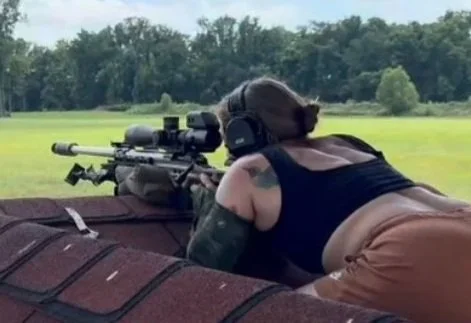
In part due to this being your home range, and in part because of your experience, and rounded out by your adaptability. You shot a few things differently than I would, such as the roof, and it was a great showing of experience and knowledge in that situation. I think your big picture approach to things is really good — you know where you want to go, why, and how you’re going to do it. My job for you is to iron out any wrinkles so that nothing else is in your way, because your decision making in the match field is already solid.
Mover!
You mentioned in the survey that you miss more than you should on movers, and I think most can say that depending on the day. Again as one of the few times I really got to see you shoot, you made mincemeat out of that mover! It wasn’t a small target, but you are obviously comfortable there, and your misses are probably due to more wind and spotting on that type of dynamic target. Overall nice job here.
REFINEMENT OPPORTUNITIES:
Self-diagnosed Pre-Training Survey:
Limited Technical Support & Knowledge –
As much as this might see more unique to you than myself, I can really identify with it. I am not a mechanical person, and prior to this sport I pretty much could only change a bike tire. Like you with Greg, I had one mentor that showed me how to not fall off a cliff, but basically left me there — so I had some good guidance but had to do a lot to figure it out on my own. There are many people willing to help, but between not wanting to ask everyone for everything, and the occasional person who didn’t care to explain, it was easy to just think I’d go it alone. Eventually I started to spread questions out to avoid exhausting people, but then you get mixed answers and a Frankenstein situation of miss-matched guidance.
The good news is you have a person like Greg in your corner to help, and myself as well. And you didn’t have to pay for some questions with me! Moving forward I’d be happy to help answer questions and keep you fed on that kind of information. It’s a very familiar personal experience and because of that uphill battle of information, I try to share freely all that stuff that people get stuck on in their garage not sure how much torque, or where a spring goes, all that stuff. You won’t annoy me, so please don’t hesitate to send questions when you get them, and if I can answer quickly I will.
VIP VIDEO SUGGESTIONS:
https://www.carusoprecision.com/vip-core-skills/v/trigger-install- there are five or so videos that cover most of the mechanical setups of main gear components. I didn’t list them all, but there’s scope, trigger, action, and general gear setup videos to reference if you ever needed it.
Wind Calls -
Proficiency in reading wind is a long game, there’s just not many ways around it. However, that flow sheet I gave everyone is a really good guide to staying focused on the conditions and how to quantify them. I’ll put a drill in your training plan to work on this, but it really comes down to trial and error, coupled with investigation and reverse engineering. I have spent a lot of time studying conditions in a spotter, coming up with a plan, testing it, and then dissecting what I missed, or what environmental conditions/indicators WOULD have given me the right answer had I seen them or put more merit on those factors. Sometimes it was mirage that was misleading when the grass is a better direct indicator, or vice versa.
One of the base level approaches is to NOT just use what you get on your kestrel, but to pick a near, middle, and far wind call. Use the kestrel for near, down range indicators and mirage for middle and far zones. Change the focus on your binos/spotter to better “choose” what range you’re reading mirage at.
The second level is to take a plan that was made under calm mental conditions, and then take it the rifle scope - give yourself a timeframe, and work to quickly and simply analyze, then confirm or adjust, ending with a shot. Then armchair quarterback the results; that is where the long term learning will occur.
As I previously mentioned, I’d be happy to get you some more info on the wind theory if you wanted it, maybe best in a call or web chat so you can see a few slides. I know the wind analysis drill was a bit slow, I’m not sure how much you were able to engage, but that handout with all the variables I’m looking for is a really good foundation. It’s definitely a “best guess and test” journey. The more you slow down and reverse analyze how well you did and what you missed, the better you’ll do over time. Simply put, you need to work on this probably more than everything else to get the improvements. Here are a couple videos from the online training that will reinforce what we covered together.
VIP VIDEO SUGGESTIONS:
https://www.carusoprecision.com/vip-core-skills/v/wind-pt-1 - main focus on mirage and downrange indicators for quicker call on direction and velocity by eye.
https://www.carusoprecision.com/vip-core-skills/v/wind-pt-2 - gaining a quick feel for when angle matters more vs. when velocity matters more - quick call by eye again, better on the clock
https://www.carusoprecision.com/vip-core-skills/v/dopedata-cards - how to get organized to keep it simple and more easily managed mentally on the clock.
Recoil Management -
I think we both see this as an area that is slowing you down. All things considered you’re doing a good job, but any big jumps in the system make spotting much more challenging. A couple things to look at and consider adjusting:
Center of Gravity - Moving this forward even an inch can help keep the muzzle down during the shot. Ideally, it should be centered in the middle of the positional bag when on a prop. Moving it an inch further forward would keep it from becoming too forward and unstable in the bag, but aid in recoil. Test it by balancing your rifle on a small hard object rather than a big bag - this will help pinpoint where the balance point/center of gravity is currently.
Approach To The Rifle - building a position while leaning down into the buttstock is very natural, and inherently can cause muzzle jump tendencies. For many it’s not an issue, but for myself it was horrible. I see you building positions like I usually do, with a downward angle torso, and then further adding downward forces by necking down into the scope. I suggest trying to get your body lower when able to come straight into the butt pad from behind rather than from above. Try to acquire a nice sight picture before committing to a shoulder position. Also, when all set up, try a last minute shoulder adjustment where you disconnect and roll your shoulder down, allowing it to naturally flex upward into a resting position more underneath the buttstock, with a natural upward tendency. This will give a better backstop for that recoil snap.
Bag Settling - be aggressive with sawing the rifle into the bag. An initial large saw, then a fine-tune shimmy as you hone in on the final aim point
Roll Down Final Point Of Aim - to work our imperfections in our favor, we can steer our NPA errors in a direction to offset the muzzle jump. If you see you keep jumping up, resettle your general aim point above the target, then slightly roll it down onto final aim point at the center of the target. Now all the muscles and bag structure are primed to keep going downward. I don’t want you to shoot on the move while rolling down, but roll down to the center hold on target, then stop, brief pause, then shoot. Practice this and you can play with how much you need to roll down to offset the muzzle rise. Start with a mil or two above and go from there.
I think these things each have a nice affect and result if done right, especially in conjunction together. Try each one as a standalone test and document your results. Use those findings to try and reshape how you build and shoot.
VIP VIDEO SUGGESTIONS:
https://www.carusoprecision.com/vip-core-skills/v/fundamentals-shooter-interface - Connecting body to rifle
https://www.carusoprecision.com/vip-core-skills/v/positional-shooting - big section on bag technique and recoil management around 15:00 and 20:00
TRAINING PLAN:
Your overall skills are solid and at this point it’s all about a defined path forward. Aimlessly going to the range to just shoot more, will only get you so far. Let’s target specifics, and put your energy in the right places to get you measurable results.
The following section is a combination of range-day timeline AND items to work on. Take these things and try to incorporate them in a compounding way that will stack benefit on top of benefit. This is designed to give you maximum results in the areas of improvement you need.
RANGE DAY ITINERARY:
1. Review forecast before going – come up with a guess of min-max wind hold you’ll need at say 800 yds.
2. At Range - Check zero/chrono/adjust kestrel.
3. Drills – start with the cold wind call at distance.
4. Work through other drills in this plan, and don’t be afraid to add/substitute what you need.
5. Mid day, when the wind has the most potential, stop your other drills and repeat a full wind analysis, ending in another semi-cold call at a farther target.
6. Take notes!
DRILLS:
Cold Wind Call:
EVERY TRIP OUT, make this your first plan after checking zero. The hard part of this drill is that everyone loves the satisfying feeling of hitting every hundred or so, validating data. But you can do that later! The other challenge is that there’s nothing on the line, it’s not a match, so it’s easy to jump the gun and get impatient.
Don’t rush, take in every detail, study the area, and average your wind across the field of fire.
Finalize your call, and take a poke.
Hit or miss, reverse out of the shot and analyze what you could have seen better.
See if there is a single indicator you could’ve used during the shot sequence that would’ve been the best source of information.
DON’T SKIP THIS STEP - This is where the learning happens!
It’s a long term gain, sow progression drill. Things won’t necessarily change overnight, but it’ll take the already solid wind calling you have, and help you start to hone in on more specific details.
A second level drill would be to switch to only doing this on the rifle
Give yourself a few minutes tops, then one minute, then make your first shot within 20 seconds.
800+ yards is fine, does not have to be 1000…
Efficiency Drill 1:
Using this standard drill mainly to iron out your bag stability improvements and check for complete equipment control throughout…
Think of the build and break drill from the class
15 seconds, then 12 seconds, then 10 seconds…
Pick a standard target - .4 wide, non-painted steel preferred
Sturdy prop, different positions available. Pipe fence was a great example
On the clock, build a swift and complete position, and shoot 2 shots on target
Bag down, rifle down
Drive it forward while lining up barrel to target
Settle QUICK AND FIRM into the bag as you acquire target in scope
Mag well buried into bag for rudder support
Forcefully and abruptly sawed/shimmied into position in target area
Finish building connection behind rifle
Make final shimmy onto exact POA
Push out a breath as you close the bolt
Hyper focus on target, make the shot!
Spot, RESET in the bag, cycle another round, make second shot!
6. Evaluate your progress on building an effective position quicker without compromising fundamentals.
Strive to have a solid grip, saddle the rifle against your body when making big movements, and be aggressive with your strength in managing the rifle – You are in charge, not the rifle!
7. Choose another time limit, and repeat
Recoil Drill:
Incorporate with previous drill, introducing each technique for a few repetitions and record results. This will help identify what tips work the best and are more naturally fitting in a normal timeline. Rushing isn’t the goal, but if it takes you ten extra seconds to implement a technique, it may not be the first one to implement in real world engagments.
Aggressive Sawing and Shimmying in Bag
Settle High, Roll Down To Final Point Of Aim
Build Natural Position, Then Roll Shoulder For Final Position And Shoot
Variations Of Shoulder Pressure, Medium, Firm, And Soft - Especially if you change your balance point
Spotting Drill 1:
Do this for the first several shots, until you have lost the element of surprise on your wind call. Once you know confidently know where your shots are landing and where the next ones are GOING to land, you move to drill 2. Next phase will allow you to re-introduce the element of surprise to make your brain have to analyze the point of impact again from a fresh perspective… But for now:
Start on completely sturdy props and use un-painted steel
Use a big/small array, maybe a KYL Largest and then Smallest (or one of the smallest)
Make perfectly stable and bag-settled position
Take several seconds before the shot to study the target and backdrop
Prepare for expectations of what you’ll see with a hit or a miss
Depending on your vision, consider more emphasis on plate movement and statistics (how likely you expect to be over or under on your windage).
Take a shot, and freeze to see everything you can, and take a few seconds to process.
Make a measured call, not “a little left,” but “0.2 left of center…”
Take that call to a small plate and test your call.
If it hits – SUCCESS… If it misses, repeat the drill on the big plate and see if you see it better;
You will likely have a better expectation the second time because you just saw a miss in the dirt. That’s ok!
Let that guide your brain to better interpret the information down range this next shot
10. To reset the level of challenge, take the drill to a significantly different distance and repeat the drill.
Spotting Drill 2:
Taped Turret, with a buddy or alone, re-introduce the element of surprise and get yourself working hard to spot again once you’ve pretty much figured it out for the current conditions…
Have a buddy spin your windage off by up to double what the actual wind conditions call for, and down to zero wind. For example, if it’s roughly 1.0L of wind, allow for anything within 2.0L-0.0.
This simulates a big gust or a big lull in wind; a bit much, but still reasonable and good for this drill
If you’re alone, it’s less calculated
Without looking, spin your own windage a little one way, reset your grip and go the other way. A few clicks this way, that way, this way, etc… Once you feel lost, you’re set!
Cover the turret with some painter’s tape - if alone and it’s on the support side, just don’t look!
Shoot, spot, measure, correct – analyze results
Reverse dissect what you thought you saw versus what actually happened
Contrary to the fun speed stage in class, take your time. Accuracy over speed here!
Repeat this drill until you can’t miss your second shot, or you’re completely sick of it! At a minimum, do this for 5 cycles.
Free Time:
HIGHLY recommend reverting back to more scope based wind work in second half of day
Mirage is up, changes more frequent, challenge accepted!
Build a tough panning long distance stage, and put in the time to get a specific plan
Make sure you have a plan A, and a simplified plan B using simple additives per target.
Test it out and reverse engineer what you needed, vs what you saw or could improve
2. Obviously feel free to do anything else that needs work – don’t skip the tough stuff!
CONCLUSION:
There are always more drills and beneficial methods you can use depending how you want to attack your focus areas. These are my observations and best ideas for you, but certainly not the end-all-be-all; don’t be afraid to try other things. You’re in a good spot, especially if you definitively approach each of these little ideas, I know you’ll be able to pick up several points every day you’re out there. That could be a big chunk in a 2-day match. I know health and energy are major factors right now, so I would focus slowly on one of these items at a time, squeeze the juice from it, lock it down, and then move on. Rome wasn’t built in a day — you won’t want to try 10 new things each trip out.
I’m open for a follow up if you have any questions. See below for a bonus list of highlighted items from the curriculum that I want to emphasize before your next trip out. Please stay in touch, share your victories big or small, and let’s shoot together again down the road. Thank you and God bless,
Matt Caruso
Caruso Precision
CLASS HIGHLIGHTS AND RECOMMENDATIONS
1. Get out and train sooner than later, lock in what you learned
2. Keep your attention within your thirds, G.O.D. — Glass, Observe, Develop
3. Stick to your processes, in every phase of the day/match/stage/shot sequence; don’t cut corners
4. Drill your weaknesses even if it’s less fun – “don’t skip leg day!”
5. First shot = most important shot… make it perfect!
6. Don’t settle for bad wind angles, use an azimuth or good compass for exact numbers
7. After a stage, reverse math the wind to derive true wind conditions to carry forward
8. Other than checking DOPE, don’t shoot clean steal because it makes you weak
9. IMO spotting is the most important skill beyond having good fundamentals
10. Prepare spotting expectations based on target environment BEFORE you’re on the clock
11. Know your min. correction for edge miss (½ target) and blind miss (¾ target) BEFORE on the clock
12. Plan your toughest target, toughest position as a primary driver of your plan development
13. Review EVERYTHING on your rifle end to end before saying you’re ready for the clock
14. Make mental snapshot of last shot before stepping off. Finish process before chatting with buddies
15. Pause, process, plan, then execute… Do NOT rush downrange analysis
16. Corrections should have a number, not just a direction… “I was left,” vs “I was 0.4 left”
17. Move the bag and rifle separately from position to position
18. Saw into bag before every shot, it becomes muscle memory, costs no time, yields good benefit
19. Confidence = efficient time management. Take the time before the shot, or you’ll struggle afterward
20. Move quick, shoot slow